
Portfolio - IJN I-21
Imperial Japanese Navy I-21
The model of the IJN I-21 displayed in this case was scratch built using original blueprints preserved in the United States Navy archives. Every detail of the replica reflects careful research and craftsmanship, ensuring the submarine is represented as accurately as possible.
This scale model depicts the Japanese submarine IJN I-21 at the time of its torpedo attack on the SS Montebello shortly after the attack on Pearl Harbor on December 7, 1941. The scene captures a specific historical moment during the early days of the Pacific War, when Japanese submarines were actively operating along the West Coast of the United States.
The replica also reflects the submarine’s condition after operating for an extended time at sea. Its appearance shows signs of operational wear along with the routine maintenance and upkeep that would have been carried out by the crew. These subtle details help convey a realistic view of the vessel as it might have appeared during its wartime patrol.
By combining original naval blueprints with historical context, the model brings an important naval history moment to life in three dimensions, allowing viewers to better understand the events and technology of the era.
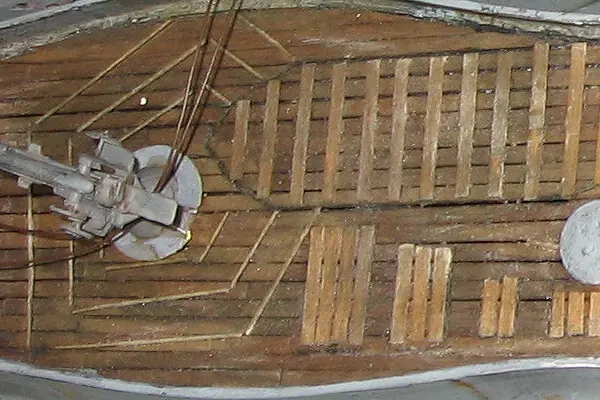
This image shows scratch-built wood decking on the I-21 model, created by Rich. It also provides a partial view of a scratch-built deck cannon on the stern of the vessel.
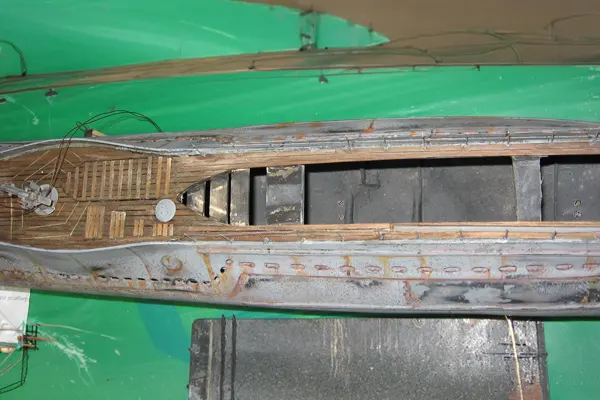
This photo shows how the sub-hull was built in the manner of an airplane fuselage. The structure was constructed plank on frame, then covered with aluminum for metal plating.
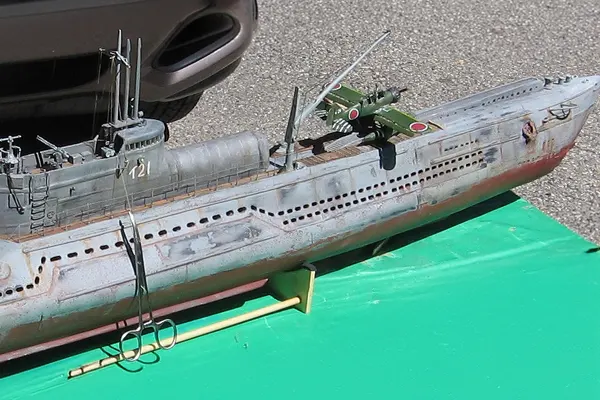
View of the submarine bow featuring the folding retrieval crane and a section of the takeoff ramp.
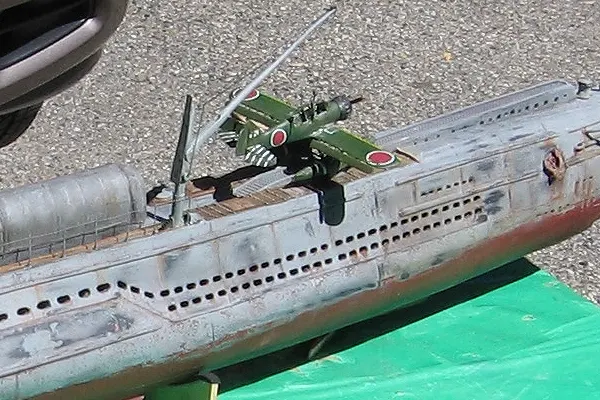
Submarine aircraft handling process showing planes stored in a hangar on rail cradles, wings unfolded, moved to the launch ramp, fitted with pontoons, and launched into the wind. After water landing, the crane retrieves the aircraft and returns them to the hangar using the reverse setup sequence.
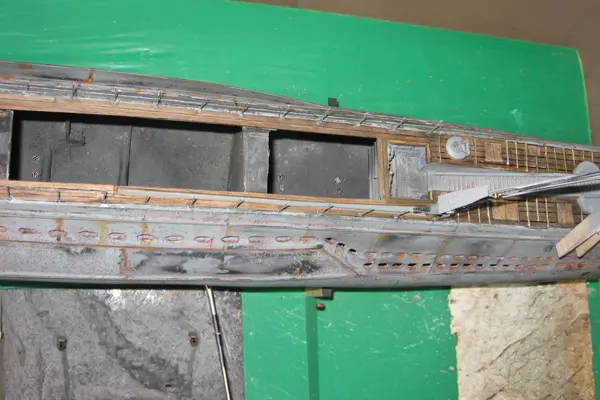
Here is another look at the construction of the hull, which shows how the submarine was built in a manner similar to an airplane fuselage. The structure was constructed plank on frame, then covered with aluminum for metal plating.